
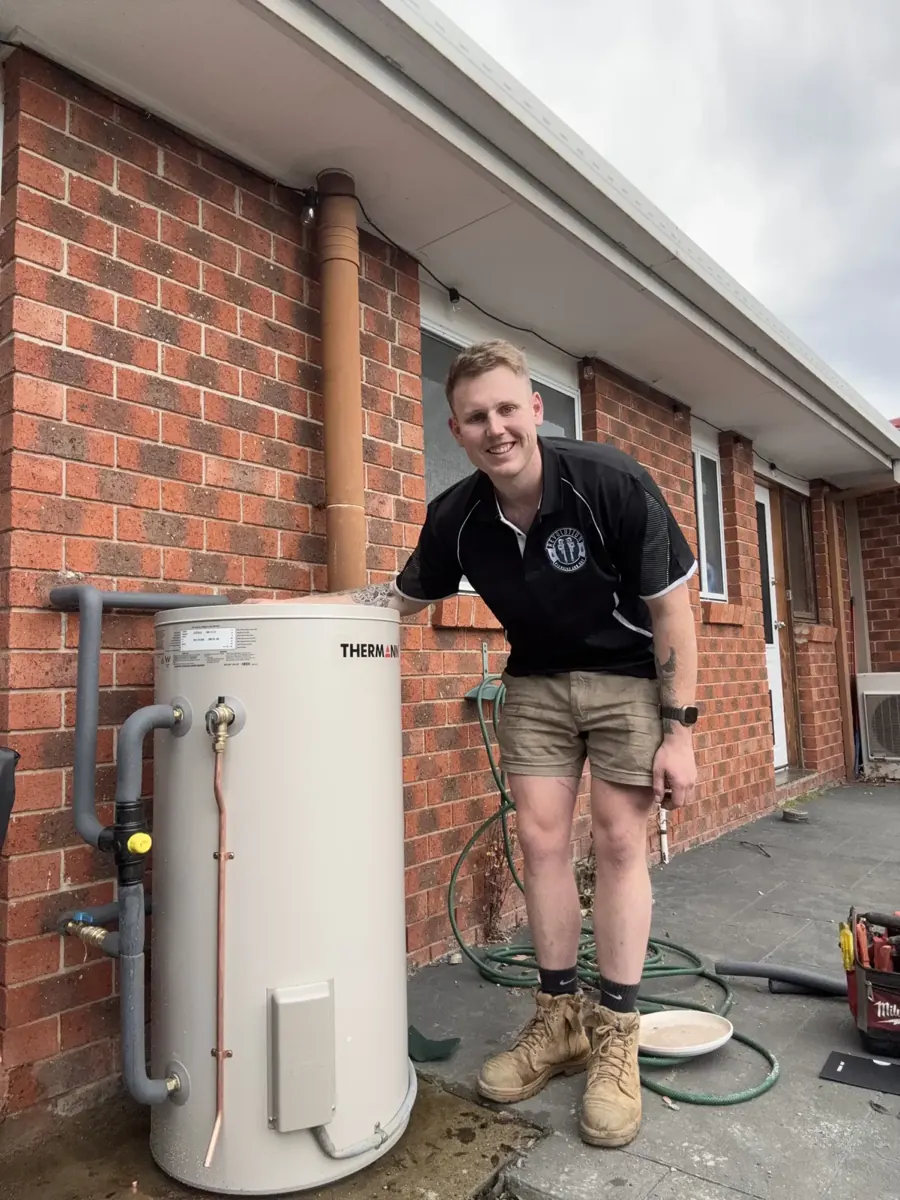
If you have lived in Canberra for more than one winter, you know how cold it gets. We regularly see overnight temperatures drop to minus five, minus seven, even minus ten degrees in some suburbs. That kind of cold does serious damage to plumbing systems, especially in older homes with exposed pipework. Every winter, I attend dozens of call-outs for burst pipes, failed hot water systems, and frozen plumbing that could have been prevented with a bit of preparation.
Almost all of it is small jobs you can knock over in a weekend in April.
Why Canberra winters are tough on plumbing
Canberra is one of the coldest capital cities in Australia. In the coastal cities the temperature rarely gets under zero. Here it stays under for hours at a stretch, night after night, right through June, July and August. Add the frost, the dry air and how fast the temperature swings between afternoon and 4am, and plumbing takes a beating.
Water expands when it freezes. Freeze it inside a pipe and the pressure has nowhere to go, so it splits copper, cracks PVC joints and blows fittings apart. The catch is that you do not find out straight away. The ice is still plugging the hole. It is only when the morning sun thaws it and water starts moving again that you see what the cold did overnight.
Suburbs at higher elevation or in frost hollows tend to be hit hardest. Areas like Tuggeranong, parts of Weston Creek, and outer Belconnen regularly record the coldest overnight temperatures in the ACT.
Insulate exposed pipes
Insulating exposed pipework does more to prevent frozen pipes than anything else on this list. Check these spots:
- Anything running along the outside of the house, or through an external wall with no insulation in it. These go first.
- Under the floor, if the house is raised. Cold air moves through a subfloor all night. Older places around Woden and the Inner North often have an accessible subfloor with bare copper running through it.
- The roof space. Pipes in the ceiling cavity will freeze if there is no insulation above them.
- Garages and sheds. Any plumbing in an unheated outbuilding is at risk.
- Garden taps. The outdoor taps and the pipe feeding them freeze more often than anything else on a property.
Pipe insulation is cheap and you can fit it yourself. Foam pipe lagging comes from Bunnings and most hardware shops in split tubes that clip around the pipe and tape shut. For outdoor taps, buy an insulated tap cover, or wrap the tap in an old towel and a plastic bag if the cold snap has already started.
Service your hot water system before winter
Your hot water system does its hardest work in winter. The water coming in is colder, the showers get longer, and the unit is fighting the ambient temperature on top of that. Anything already on its way out will give up in July, not January.
A pre-winter service picks up worn anodes, failing elements and leaking valves while they are still a booked appointment rather than a cold shower on the worst morning of the year. On gas hot water systems the service also covers the burner, the pilot light, the thermocouple and the gas connections.
Once a hot water system is past ten years old, it is worth talking about whether replacing it beats repairing it. Newer units run more efficiently and break down less, and a replacement you planned costs less and hurts less than one you organise at short notice in the middle of July.
Check your gas heating
If you have ducted gas heating, get it serviced before winter starts. The service covers the heat exchanger, which gets checked for cracks because a cracked one leaks carbon monoxide into the house, along with cleaning the burner, testing the thermostat and inspecting the flue.
Gas heaters that have gone unserviced can produce carbon monoxide, which has no smell and no colour. It is a genuine risk in a poorly ventilated house with an ageing gas heater. The symptoms are headaches, dizziness and nausea, and severe exposure kills people. A service and safety check costs very little against that.
On gas wall heaters and space heaters, look at the flame. It should be clean and blue. Yellow, orange or sooty means the heater needs servicing. Check the room ventilation too, because open-flue heaters need fresh air coming in to burn safely.
Prevent frozen pipes
Insulation aside, there are a few things worth doing when a serious cold snap is forecast:
- Leave a tap on a slow drip overnight when the forecast is well under zero. Moving water is much harder to freeze than water sitting still in a pipe.
- Open the cabinet doors under the kitchen and bathroom sinks so warm room air can get around the pipes behind them.
- Leave the heating on a low setting overnight. It keeps the inside of the house above freezing, which is enough to protect the internal pipes.
- Find your mains shut-off valve. When a pipe bursts you have to kill the water fast. It is at the front of the property near the water meter. Go out and turn it now to check it moves, rather than finding out at 3am with water coming through the ceiling.
What to do if a pipe freezes or bursts
If a pipe freezes (no burst yet)
If you turn on a tap and nothing comes out (or just a trickle) on a cold morning, a pipe has likely frozen. Do not try to thaw it with a blowtorch or open flame. This can damage the pipe and create a fire hazard. Instead, use a hair dryer or wrap the pipe with towels soaked in warm water. Apply heat gently and work from the tap end back towards the frozen section. Keep the tap open so water can flow as the ice melts.
If you cannot locate the frozen section or cannot access the pipe, call us. We can find and safely thaw the blockage without damaging your plumbing.
If a pipe bursts
A burst pipe is a plumbing emergency. Turn off the water at the mains immediately, then call us on 0468 014 195. We provide 24/7 emergency plumbing across Canberra with fast response times. While you wait, mop up standing water and move furniture and valuables away from the affected area. If water is near electrical outlets, turn off the power at the main switchboard.
Pre-winter plumbing checklist
- Insulate exposed pipes (subfloor, external walls, roof space)
- Insulate or cover outdoor taps
- Service your hot water system
- Service ducted gas heating
- Check gas heater flames (should be blue, not yellow)
- Locate and test your mains water shut-off valve
- Clear gutters and downpipes of autumn leaves
- Check for dripping taps or slow leaks (fix before winter makes them worse)
- Stock up on towels and know where the mop is
An afternoon of preparation in autumn is cheaper than one emergency callout in July. If you would rather have someone go over the house properly before the cold sets in, give us a call. We will check the plumbing, lag the pipes that need it, and service the hot water and the heating while we are there.
Get your plumbing winter-ready
Book a pre-winter plumbing check with Jack. Stay warm, stay dry.