
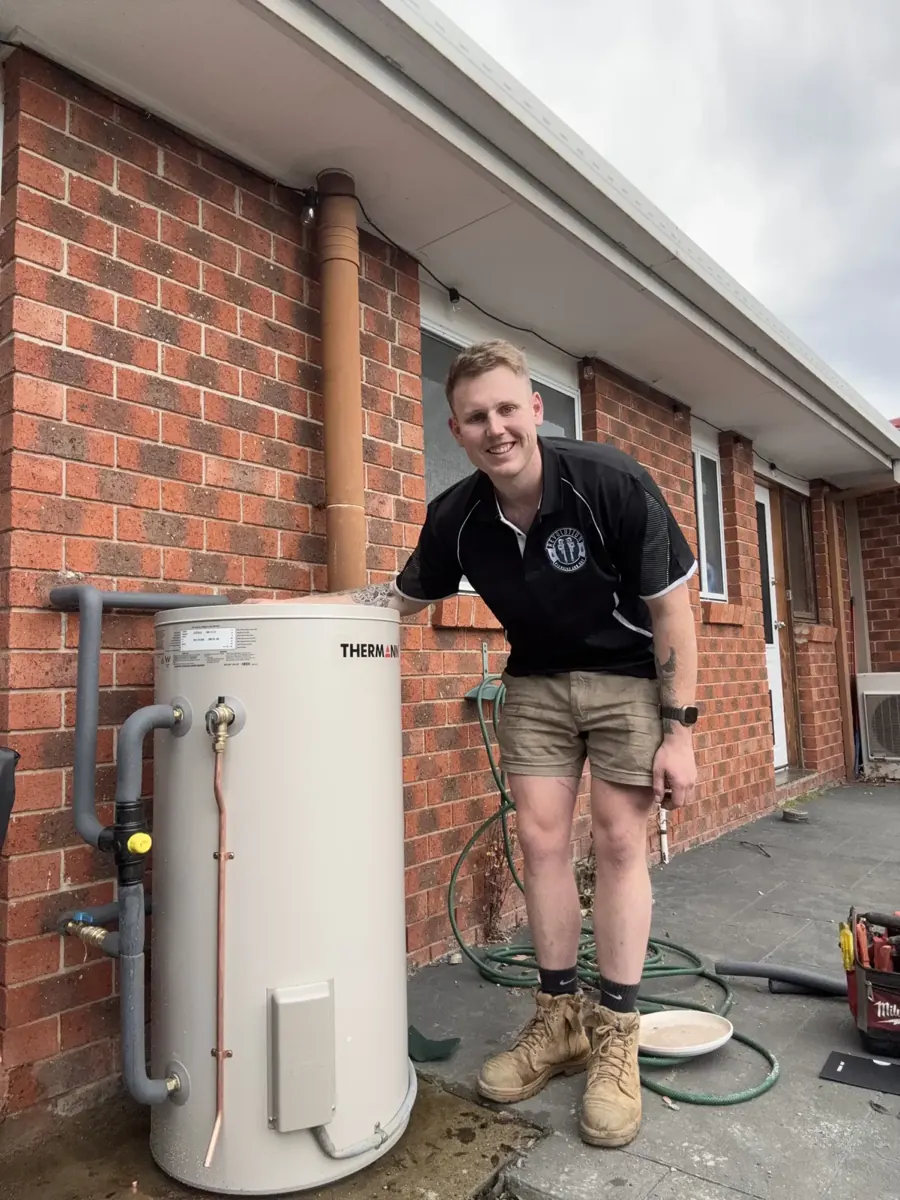
Four things bring in most of our summer callouts: pipes cracking as dry ground shifts underneath them, stormwater drains blocked after a big storm, hot water systems pushed harder than usual, and tree roots working into sewer lines to chase the moisture. Nearly all of it can be headed off with a bit of maintenance before the season starts.
Why do pipes burst in Canberra during summer?
Canberra's clay soil expands and contracts as the moisture in it changes. Through a long dry stretch the soil shrinks and pulls away from the pipes, taking away the support that has been holding them in place. That movement loads up the joints and connections until something cracks or pulls apart.
It is worse in the suburbs sitting on heavy clay, particularly across Tuggeranong, Woden and parts of Belconnen. Older homes with copper or galvanised steel pipe come off worse again, because both go brittle with age and have less give in them than modern PEX or polyethylene.
The signs of a burst pipe are wet patches in the garden with no explanation, water pressure that drops off suddenly, a water bill well above the last one, or the sound of water running with every tap shut. Any of those and it is worth a leak detection inspection before the damage spreads.
How do storms cause blocked drains in summer?
Canberra summer storms dump a lot of rain in a short window. That water washes leaves, bark, soil and debris straight into the gutters and stormwater drains, and the drains block. If they are not clear going into storm season, you get water pooling around the footings, running into the garage, or coming back up through a floor drain.
The fix is not complicated. Before summer, clear the leaves and debris out of the gutters, the downpipes and the stormwater grates. If the stormwater has not been cleaned out in a few years, a drain clean with a high-pressure jetter will shift the built-up sediment and any roots that have got in. Our blocked drain service clears stormwater lines before the next storm finds the blockage for you.
Does hot water demand increase in summer?
Summer catches people out on this one. Over the school holidays there are more people home, so more showers, more washing and more dishes. Add guests staying and the hot water system is working harder than it does in term time.
On a storage system, electric or gas, that extra demand shows up as running out of hot water at the busy end of the day. If the tank was always a bit small for the household, summer is when you find out.
Solar hot water is at its best in summer with the long daylight hours. Dirty panels, trees that have grown up and started shading them, or a system that has not been serviced in years will all drag the output down. A service before summer gets it back to doing what you paid for. Our hot water systems page has more on servicing.
Why do tree roots invade sewer lines in summer?
Trees are always looking for water, and through a dry Canberra summer the moisture inside a sewer or drainage pipe is the easiest water going. Roots get in through hairline cracks, loose joints and perished seals. Once they are in they grow fast, and the blockage only gets bigger.
The usual offenders in Canberra are eucalypts, liquidambars and willows. If you have big trees within 10 metres of the sewer line, take it as a live risk rather than a maybe.
Root intrusion shows up as sinks and showers draining slowly, gurgling from the drains, the same drain blocking again and again, and a sewage smell in the yard. A CCTV drain camera confirms whether roots are in the pipe and how far the damage goes.
What about garden taps and irrigation leaks?
Garden taps and irrigation get hammered in summer, and they waste more water than anything else on the property. A dripping garden tap looks like nothing, but it can waste thousands of litres across a summer and show up on the water bill.
What usually fails: worn tap washers, cracked hose fittings, irrigation pipe split by UV, and leaking sprinkler heads. They are all small repairs. They are just much cheaper to do before summer than to pay for in water afterwards.
Walk the property before the heat sets in and check every outdoor tap, hose connection and irrigation fitting. Turn the system on and watch for leaks, wet patches and sprinkler heads that have stopped working. Replace whatever is damaged now.
What is a summer plumbing maintenance checklist?
A practical run through to get your plumbing ready for a Canberra summer:
- Clear the gutters and downpipes of leaves, bark and debris, and check the downpipes are still connected and throwing water away from the house.
- Lift the stormwater grates and clear what you can see. If the drains are slow during rain, the underground pipe probably needs a proper clean.
- Turn every outdoor tap on fully and look for leaks at the tap, at the wall connection and at the hose fitting. Replace worn washers.
- Run each irrigation zone and check for broken heads, split pipe and leaking fittings. While you are there, adjust the coverage so you are not watering the path and the driveway.
- Book a hot water service if it has not had one in the last 12 months. Have the pressure relief valve checked and look for leaking around the base.
- If you have big trees near the sewer line and the drains have gone slow, get a CCTV inspection done before the line blocks properly.
- Find your water main stopcock and make sure the valve still turns. When a pipe bursts, how fast you get the water off decides how much damage you are left with.
When should you call a plumber vs DIY?
Plenty of summer plumbing is safe to do yourself. Clearing gutters, replacing tap washers, adjusting sprinkler heads and checking for visible leaks are all fair game. Anything involving pipe inside a wall, under a slab or underground is work for a licensed plumber.
Call a plumber if you have:
- A burst pipe or significant water leak
- A blocked sewer line (not just a slow drain)
- No hot water or inconsistent water temperature
- Low water pressure throughout the house
- A suspected tree root intrusion
- Any issue involving gas appliances
Having a go at those yourself usually makes them worse, and if the work was not done by a licensed plumber your insurer may decline the claim that follows.
How should you prepare your plumbing before going on holiday?
If you are heading away over the summer break, a few minutes before you leave protects the house while you are gone:
- Turn the water off at the mains. A slow leak running for two weeks while nobody is home can flood a room, and that cannot happen if the water is off.
- Turn the hot water system off. There is nothing to be gained from heating water for an empty house, and a pressure relief valve playing up will not go unnoticed for a fortnight.
- Put the irrigation on a timer if the garden needs watering, rather than relying on someone to come over. Run it once before you go to confirm it is working.
- Ask a neighbour to keep an eye on the place. If they spot water pooling in the yard or running down the driveway, they can get a plumber there before you come home to it.
Need help with summer plumbing issues?
Call Jack for a seasonal plumbing check or to fix an urgent problem.